I-35 in Austin is the Usain Bolt of Environmental Review

Usain Bolt (Jamaica) during the 100 m heat in Moscow, Russia, 2013, CC BY-SA 3.0 Toby87
The Texas Department of Transportation and its partners have won the race, of sorts. In August 2023, TxDOT environmentally approved the $4.5 billion, 8-mile project through the City of Austin, which includes removing the existing I-35 decks, lowering the roadway, and adding two non-tolled high-occupancy lanes in each direction," among other changes. This, despite previous reporting by Nathan Bernier and others described how the project will "devour 54 acres of land, forcing out more than 100 homes and businesses. I-35's increased capacity will bring more urban sprawl, air pollution, climate warming gases and noise."
The approval is required to build the project because of the National Environmental Policy Act (NEPA). President Nixon signed NEPA into federal law on January 1, 1970, to "to create and maintain conditions under which man and nature can exist in productive harmony, and [to] fulfill the social, economic, and other requirements of present and future generations of Americans."
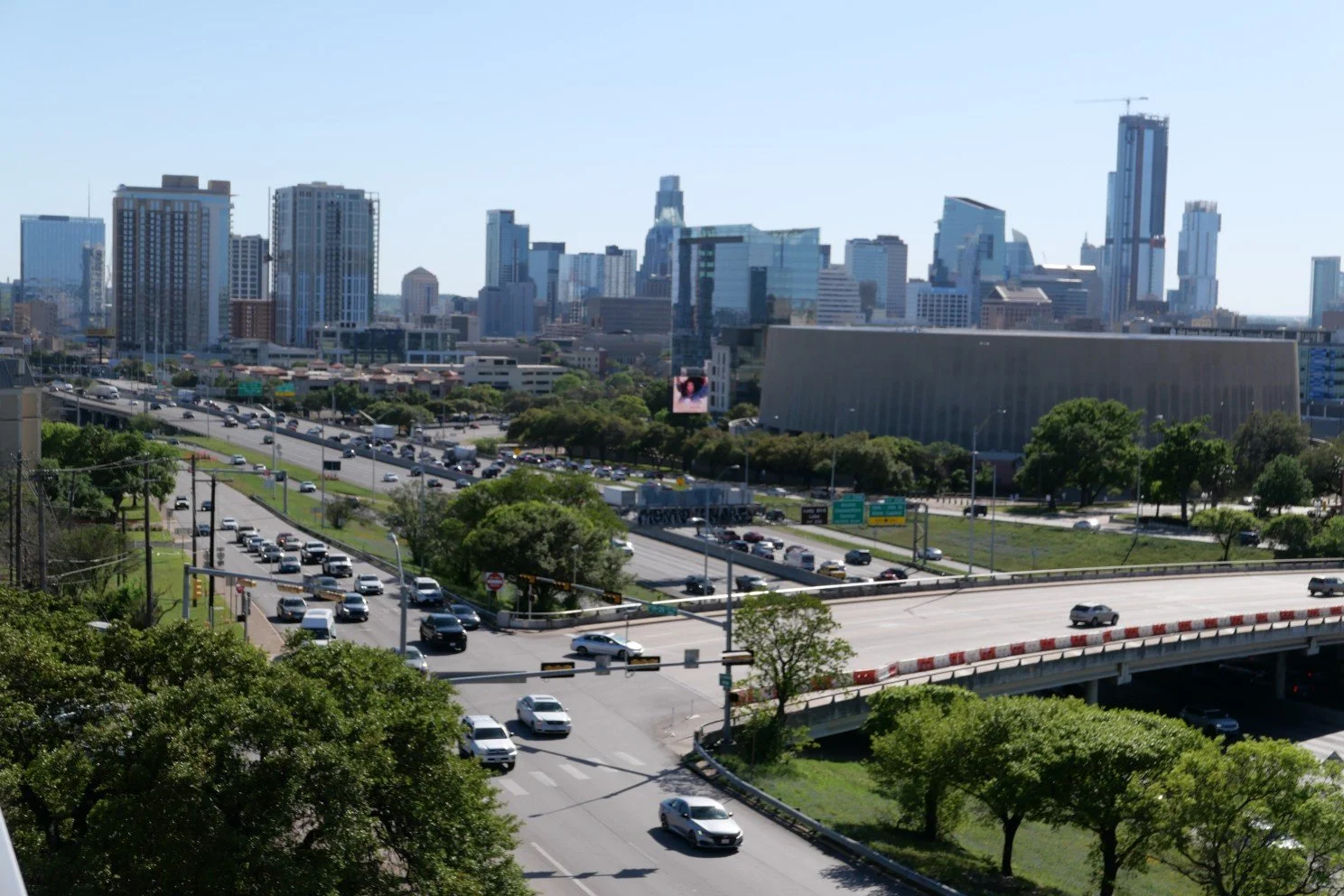
I-35 in front of Austin's downtown in 2023, photo by Greg Griffin
This newsletter, like the previous edition on How Not to Lie with Big Data, shares some of the research from my book Transport Truths, published by the Bristol University Press and Policy Press. Chapter 5 also goes into detail about the use of digital storytelling and traffic forecasting as visioning in this project.
Counterintuitive Speed
An initial environmental assessment showed the Central section of the I-35 project would have significant impacts, triggering the most rigorous review required under federal law, an environmental impact statement (EIS). TxDOT took just 226 days to approve the EIS, from publishing the draft EIS with a public hearing in January to record of decision finalizing the process.
This Central section of the Capital Express project is flanked by North and South sections covering an additional 21 miles of expansion, which preliminary costs estimate are a small fraction of the Central section. The 501-page Final Environmental Impact Statement and Record of Decision is just the front matter of thousands of pages of appendices with other studies.
TxDOT approved the Central project's EIS 17 days faster than the longer, 11-mile North section, and 29 days faster than the similar 10-mile South section, again based on when the draft environmental document was issued to the record of decision. But the North and South sections were simple environmental assessments, which just determines whether or not the project has the potential to cause significant environmental effects.
To give some context for approval speeds, the average time to approve a draft EIS as final across the US for Federal Highway Administration projects outside Texas was 2.7 years (985 days), according to the federal NEPA timeline database covering projects in 2010-2024. The official record of decision takes even longer. Part of the reason for the speed is that Texas is one of seven states granted the ability to self-approve its transportation projects.
I could not find that TxDOT publishes NEPA review statistics on its projects in a database like the federal one, complicating evaluation of TxDOT's environmental review speed.
NEPA Assignment
If federal review of a highway project's environmental process slows development, then NEPA Assignment — where a state's Department of Transportation formally takes over the federal responsibilities for transportation projects such as highways — may be the speediest answer.
Removing barriers to project development, including federal authority over the environmental process, is a priority of both the current and previous US presidents. TxDOT officially entered the program on Dec. 16, 2014, during the Obama administration. Trump's Secretary of Transportation Duffy has furthered this goal by encouraging state governors to assume the Federal NEPA review responsibility to "reduce project costs, shorten project timelines, lead public engagement, and resolve administrative hurdles." In doing so, Texas has conceded to "Federal court jurisdiction and sole responsibility for compliance if project NEPA litigation ensues," according to Secretary Duffy's letter.
In order to take over the US Secretary of Transportation's authority for environmental review of projects in Texas, the state also had to waive its sovereign immunity. The Federal Highway Administration describes that a "state DOT’s eligibility to meet the NEPA Assignment Program’s application requirements hinges on the State having waived its sovereign immunity under the Eleventh Amendment to the U.S. Constitution." Though I am not an attorney, the National Association of Attorneys General describes some of the financial, administrative, and legal impacts that a state can assume with this choice.
Community groups are suing TxDOT over the I-35 expansion's impacts. Most recently, "the lawsuit, filed by the activist group Rethink35, argues that TxDOT failed to adequately study the possible air pollution — especially fine-particulate matter (PM2.5), a harmful pollutant associated with serious respiratory and heart conditions — and health impacts of expanding I-35," as reported by local radio outlet KLBJ.
Construction and Lawsuits Underway
As of September 10th, a judge was still reviewing the lawsuit, and TxDOT was not commenting on the pending litigation, KVUE television news reported.
Though the approved environmental review allowed construction to commence, Nathan Bernier of KUT News reported the next steps involve "air and noise pollution from trucks hauling excavated rocks and dirt 24/7...routing the waters of Boggy Creek west of I-35 into the drainage tunnel...pumping thousands of gallons of treated highway runoff into the Colorado River" and now construction of nine drop shafts as part of a "massive underground drainage tunnel required for TxDOT to sink the mainlanes up to 65 feet below ground level."
At age 23, sprinting superstar Bolt was recognized as the youngest member of the Order of Jamaica, forever to be known by the title The Honorable Usain Bolt for his accomplishments. In another 23 years from now, when I-35 should have been completed for a decade and a half according to TxDOT's current tentative phasing, will we look back and also call the project honorable?